Understanding Tank Integrity
Updated: Jun 23
Risk-Based Inspections and What To Look For

Storage tanks of any kind can have gradual issues that progress over time due to a
variety of factors, such as incompatibility of the selected metallurgy for the service
condition or a high level of solids causing erosion, just to name a few. These gradual
issues worsen over time and affect overall asset reliability. You may ask yourself how
often you should inspect your assets and what should be included within the inspection scope.
API 580 is an inspection code written by the American Petroleum Institute to address this question. API 580 is all about creating a risk-based inspection plan. By utilizing this in conjunction with an understanding of damage mechanisms relevant to your industry, facilities can determine how frequently inspections are needed on their storage assets.
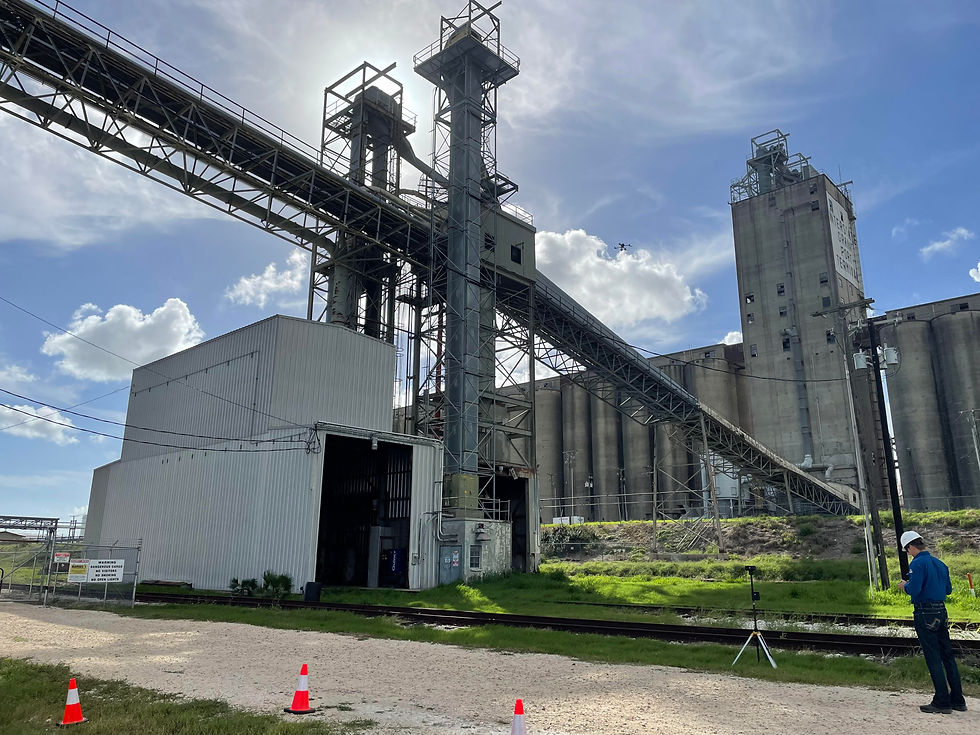
Engineering Design Services has been on-site, walking around tanks, flying drones overhead, and jumping in manways to obtain detailed reports and deliver high-quality risk-based inspections for clients across Arkansas. EDS has helped develop risk-based inspection plans for several clients, helping them save time and money by not over-inspecting equipment.
Project Examples
Prior to an inspection, facilities will have the vessel completely drained and cleaned. As part of the tank inspection EDS will look at and document all areas of the tank including:
Roof (Internal & External)
Shell (Internal & External)
Nozzles (Repads, Internal Projects, Weld Seams, Flanges, and Bolting)
Floor (Internal Only, Typically and External Chime)
Foundation (Concrete Pad, Typically)
Any Internal Equipment

This image highlights weld seams from prior repairs that are evaluated during inspection. These locations are considered critical monitoring points and are routinely assessed for indications of cracking, corrosion, or other forms of deterioration. You may also notice a lap patch at the top of the photo. It is important to pay attention to these repair areas for weld cracking, and preferential corrosion or erosion at the heat affected zone.


The concrete foundations are evaluated for indicators of concrete degradation, including spalling, cracking, and chipping, as well as any signs of underlying foundation movement or settlement. These areas are also evaluated as areas where moisture could become trapped under the chime of the tank. This could lead to underfloor issues which are difficult (if not almost impossible) to see with the naked eye and may require further investigation using NDT (non-destructive testing) methods.


We also closely monitor areas around nozzles as these locations are frequently exposed to stored product and are more susceptible to erosion and vibration effects.


EDS also pays close attention to the tank roof. Product build-up on the roof can lead to unaccounted-for loading, which could result in shell buckling. It can also lead to an effect known as CUI (corrosion under insulation), which is a result of moisture being trapped between the metal of the tank and something else, such as product or insulation.
Additionally, if there are walkways on the roof, there may be safety concerns if the roof becomes too thin, resulting in access restrictions. Atmospheric venting on the roof is also inspected to make sure that venting hasn’t become restricted or closed off, which might lead to a “coke can” effect, causing the tank to crumple in on itself.


Lastly, we don’t overlook the tank shell, a critical structural component of the asset. During inspection, it is carefully evaluated for corrosion, including pitting and general material loss, as well as coating degradation. We also assess for any signs of deformation, buckling, or unevenness that could indicate settlement issues or compromise the overall structural integrity of the tank.
External inspections help identify issues that can compromise structural integrity or indicate deeper problems. To recap, EDS typically evaluates:
Shell Condition: Corrosion, Coating Failure, Bulging
Roof Condition: Deformation, Ponding, Venting Issues
Foundation: Settlement, Cracking, Edge erosion
Nozzles & Connections: Signs of High Stress or Erosion
Weld Seams: Cracking or Deterioration
These are often the first indicators that something larger is happening internally.
What We Look for on the Inside
Internal inspections provide a much clearer picture of actual tank health but they require planning, downtime, and confined space entry. During internal inspections, we focus on:
Floor Condition: Pitting, Corrosion, Thinning
Shell Interior: Product-Side Corrosion or Chemical Attack
Coatings/Linings: Breakdown, Blistering, Delamination
Sludge or Buildup: Which can Accelerate Corrosion
Roof Underside: Condensation-Related Corrosion
The bottom of the tank is one of the most common failure points and one of the hardest to monitor without opening it.
Why It Matters
Skipping inspections or delaying them can lead to:
Leaks and Environmental Incidents
Unplanned Downtime
Costly Emergency Repairs
Safety Risks for Personnel
In many cases, issues develop slowly but can escalate quickly once they reach a critical point.
How EDS Supports These Inspections
Our team does more than just look around for defects. We help clients understand what the findings mean, their severity, and help provide options for fixing each issue.
EDS Inspection Reports provide:
Clear Documentation of Observed Conditions
Practical Recommendations (Repair vs Monitor vs Replace)
Prioritized Action Plans
Our goal is to give our clients action plans to ensure personnel safety and asset integrity.
Final Thoughts
At EDS, we recommend a risk-based inspection plan because determining how often equipment should be inspected depends on several factors, including the asset's installation date, tank materials, current condition, service conditions, surrounding environment, and whether the tank is coated or uncoated.
A proactive inspection program helps you stay ahead of failures instead of reacting to them.